The Impact of Challenger League on Quality of Life in Athletes, Caregivers, and Volunteers
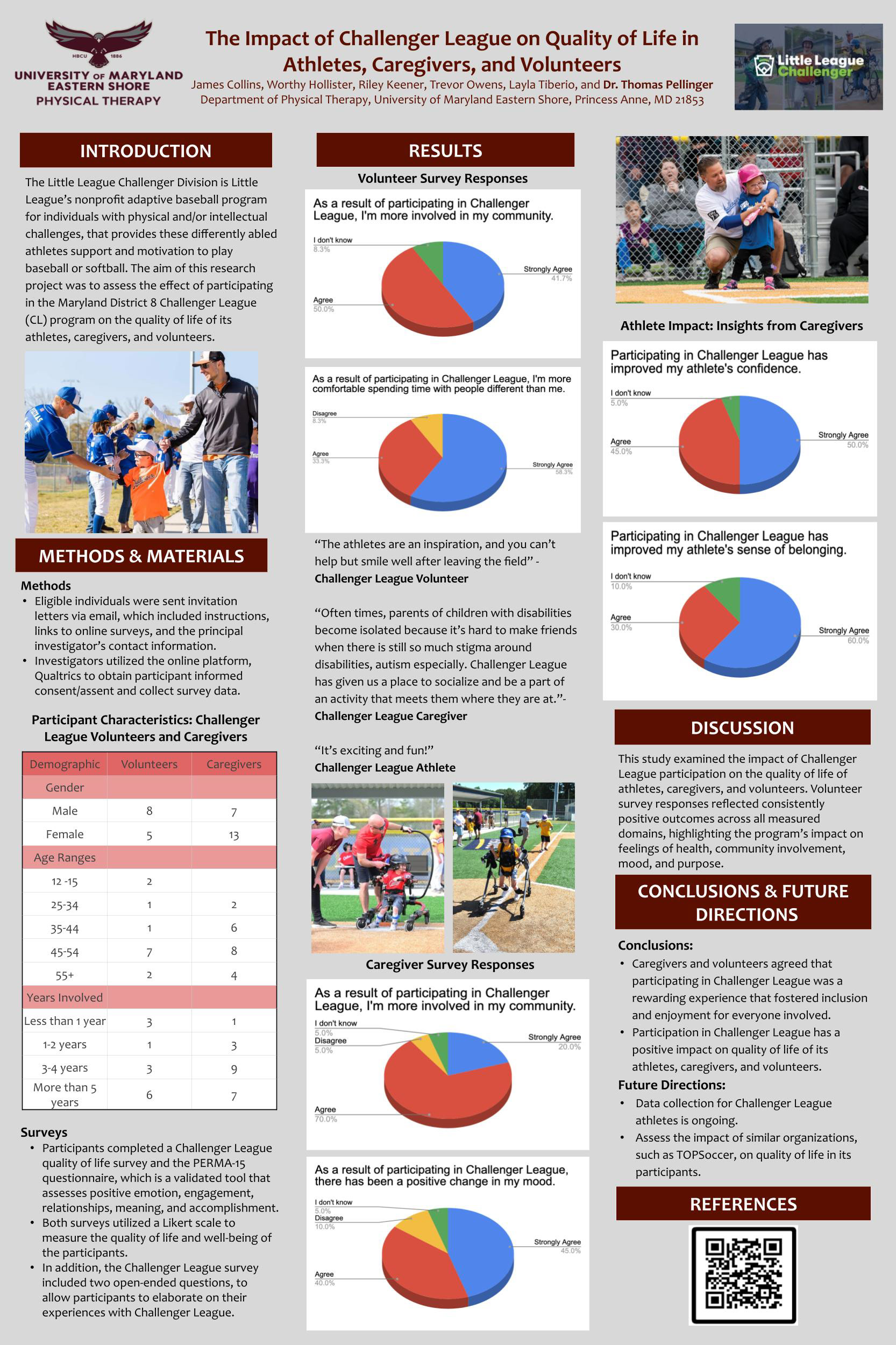
The Little League Challenger Division is Little League’s nonprofit adaptive baseball program for individuals with physical and/or intellectual challenges, which provides these differently abled athletes support and motivation to play baseball or softball. The aim of this research project was to assess the effect of participating in the Maryland District 8 Challenger League (CL) program on the quality of life of its athletes, caregivers, and volunteers. Individuals who were eligible to participate in the study were sent invitation letters, which included instructions, links to online surveys, and the principal investigator’s contact information. Investigators utilized the online platform, Qualtrics, to obtain participant informed consent/assent and collect survey data. Participants completed a CL quality of life survey and the PERMA-15 questionnaire, which is a validated tool that assesses positive emotion, engagement, relationships, meaning, and accomplishments. Both the CL survey and the PERMA-15 questionnaire utilized a Likert scale to assess participants’ quality of life. In addition, the CL survey included two open-ended questions to allow participants to elaborate on their experience with CL. Thus far, 20 caregivers (7 male, 13 female) have completed the surveys. Findings from the CL caregiver survey indicate that 95% agreed (50% strongly agreed) their athlete had improved confidence, and 90% agreed (50% strongly agreed) their athlete had an improved sense of belonging as a result of participating in CL. Furthermore, 90% of caregivers agreed (50% strongly agreed) they were more involved in the community, and 85% agreed (45% strongly agreed) they had a positive change in mood. Thus far, 13 volunteers (8 males, 5 females) have completed the surveys. Findings from the CL volunteer survey indicate that 91.7% of volunteers agreed (41.7% strongly agreed) to being more involved in the community, and 91.6% agreed (58.3% strongly agreed) to feeling more comfortable spending time with people different than them as a result of participating in CL. An overarching theme of responses to the open-ended questions was that participating in CL was a rewarding experience for everyone involved, as it provided a fun and supportive atmosphere for athletes, caregivers, and volunteers to participate in a team sport. In conclusion, our findings indicate that participation in CL had a positive impact on the quality of life of its athletes, caregivers, and volunteers.